Prose Vs Poetry Unveiling The Key Differences
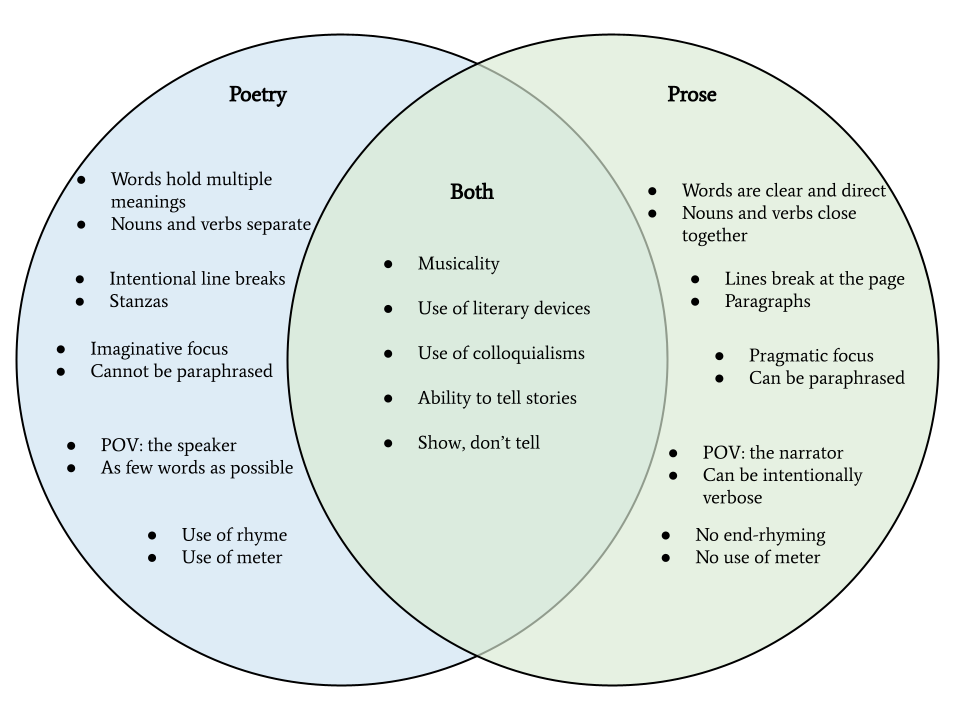
For centuries, literature has been a cornerstone of human expression, allowing us to convey emotions, ideas, and experiences in a unique and powerful way. Two fundamental forms of literature, prose and poetry, have been the subject of much debate and discussion among writers, scholars, and readers alike. While both forms have their own distinct characteristics, they share a common goal: to inspire, educate, and entertain. In this article, we'll delve into the key differences between prose and poetry, exploring their benefits, purposes, and practical applications in everyday life.
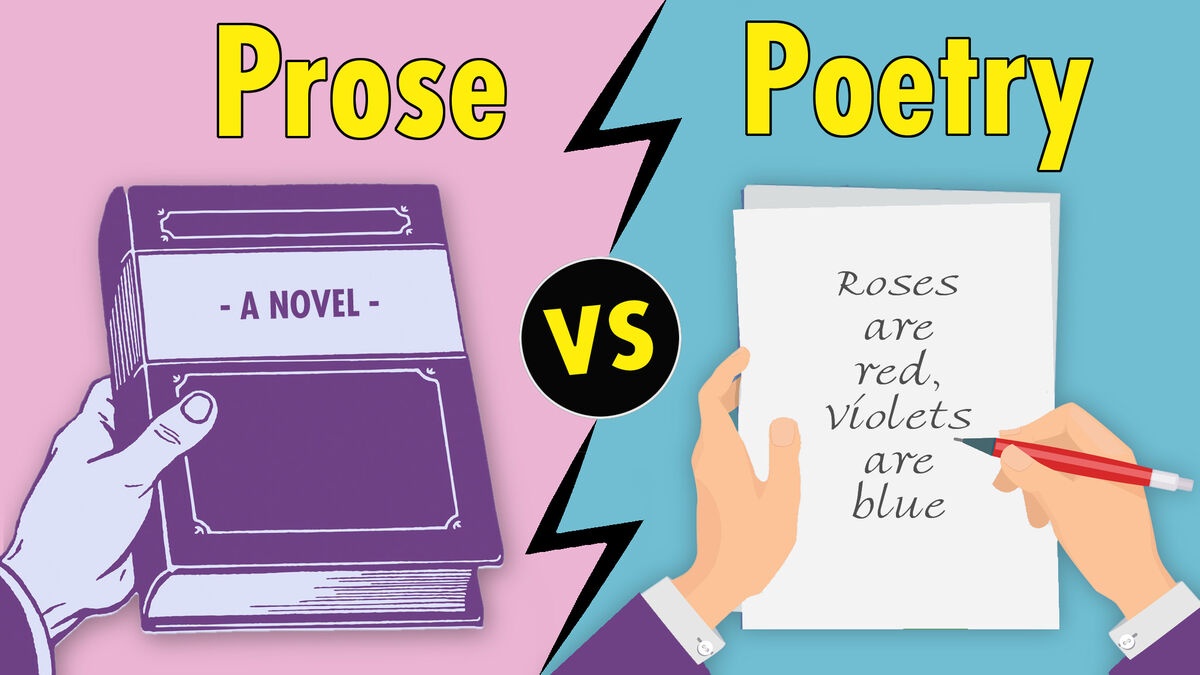
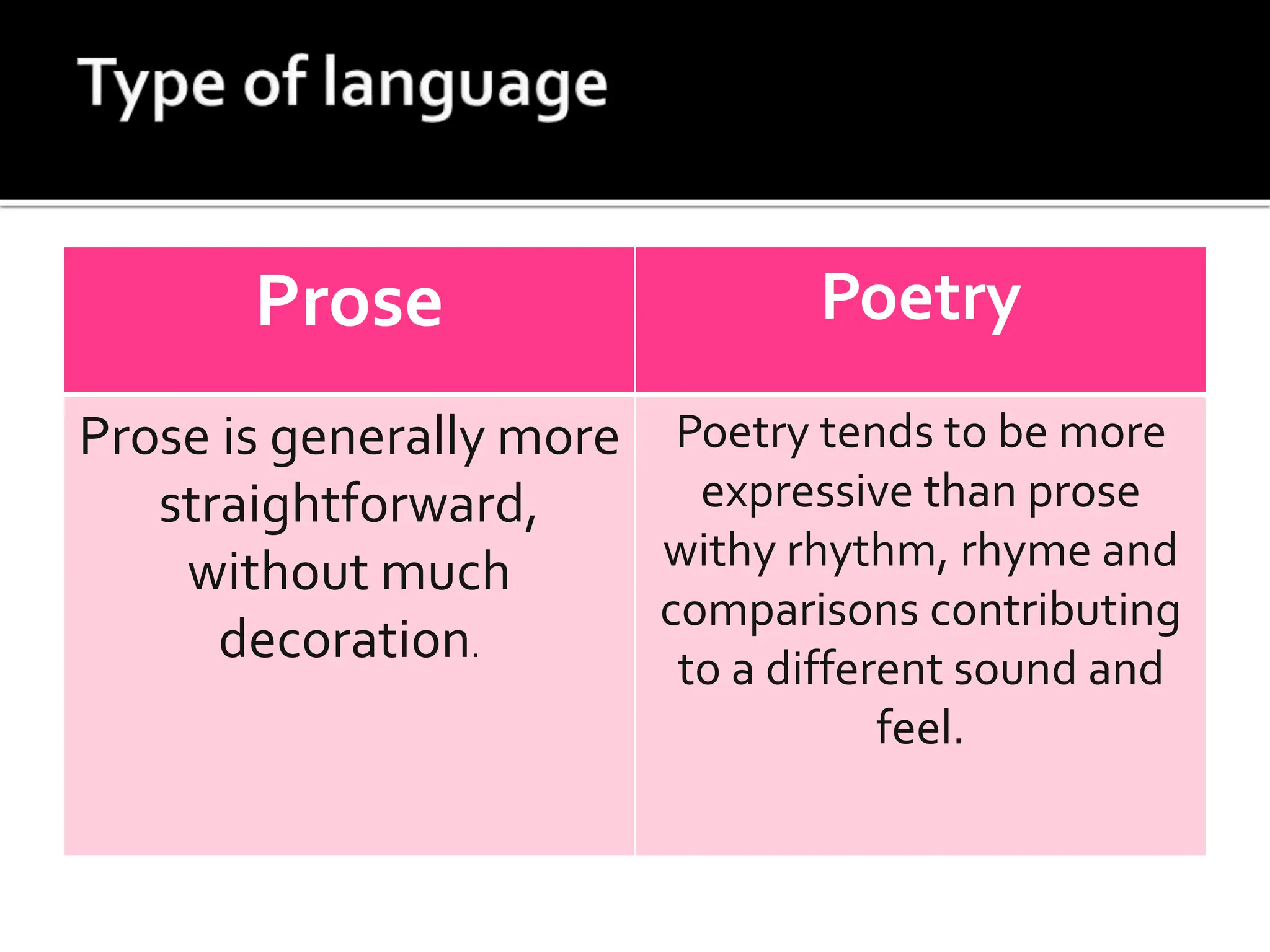
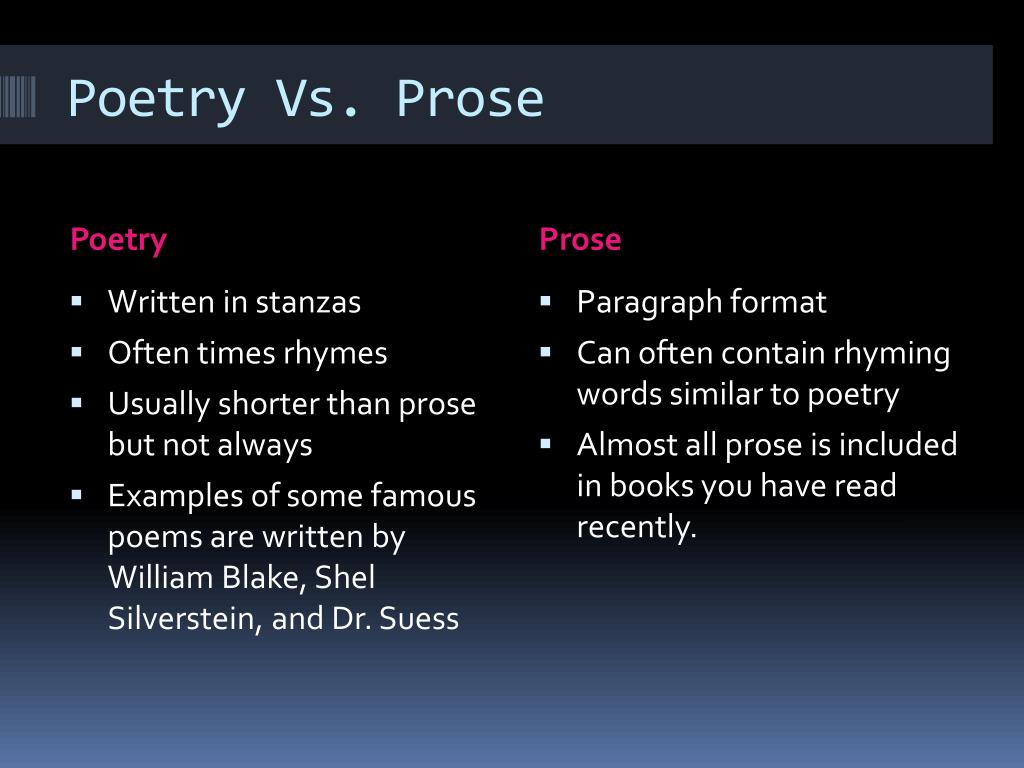
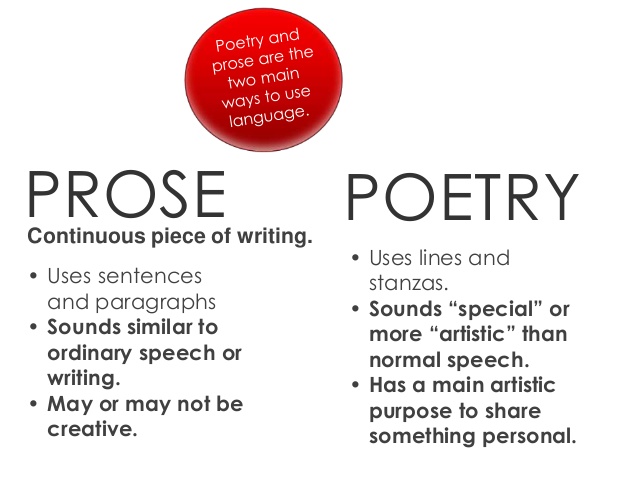
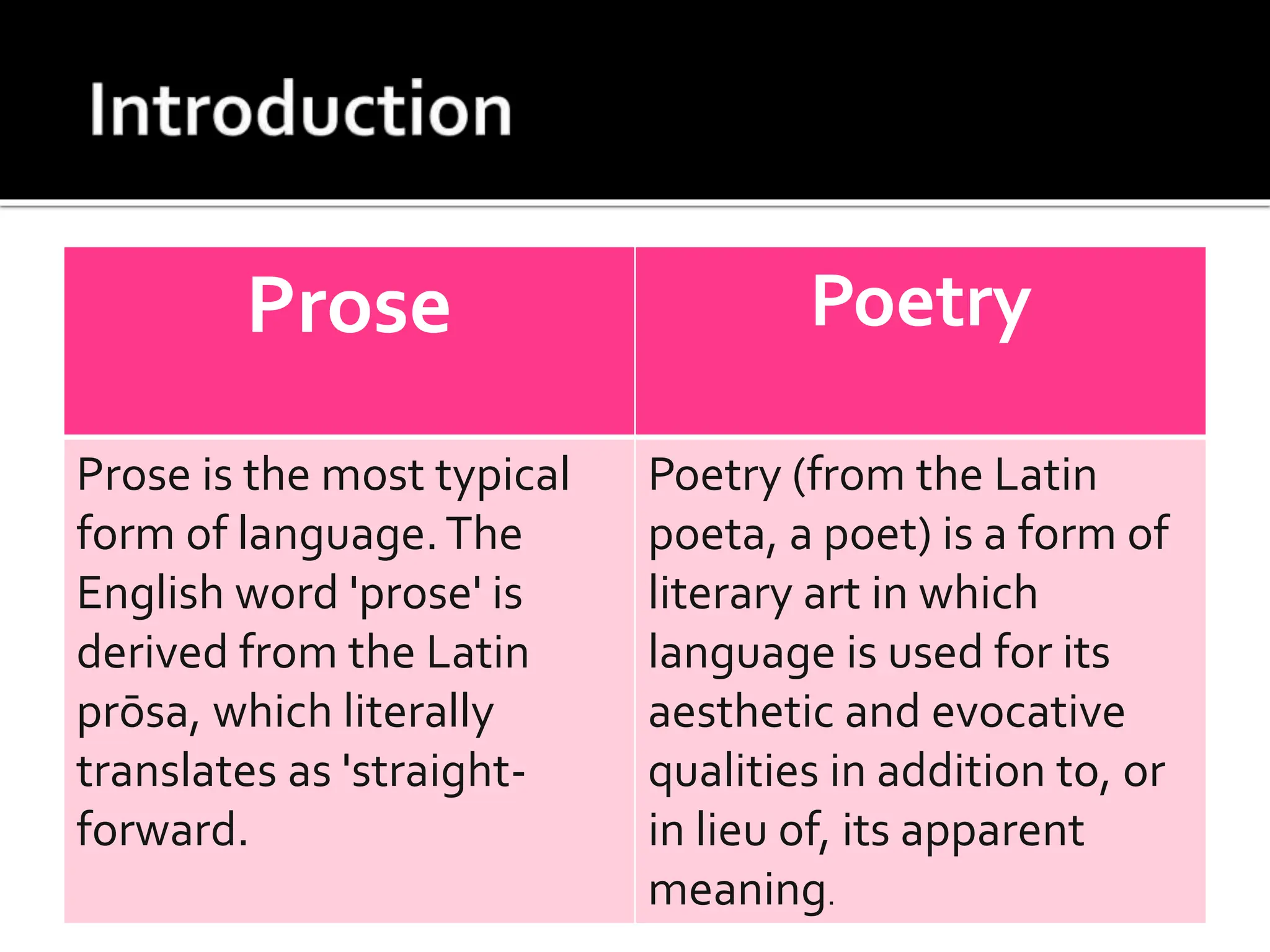
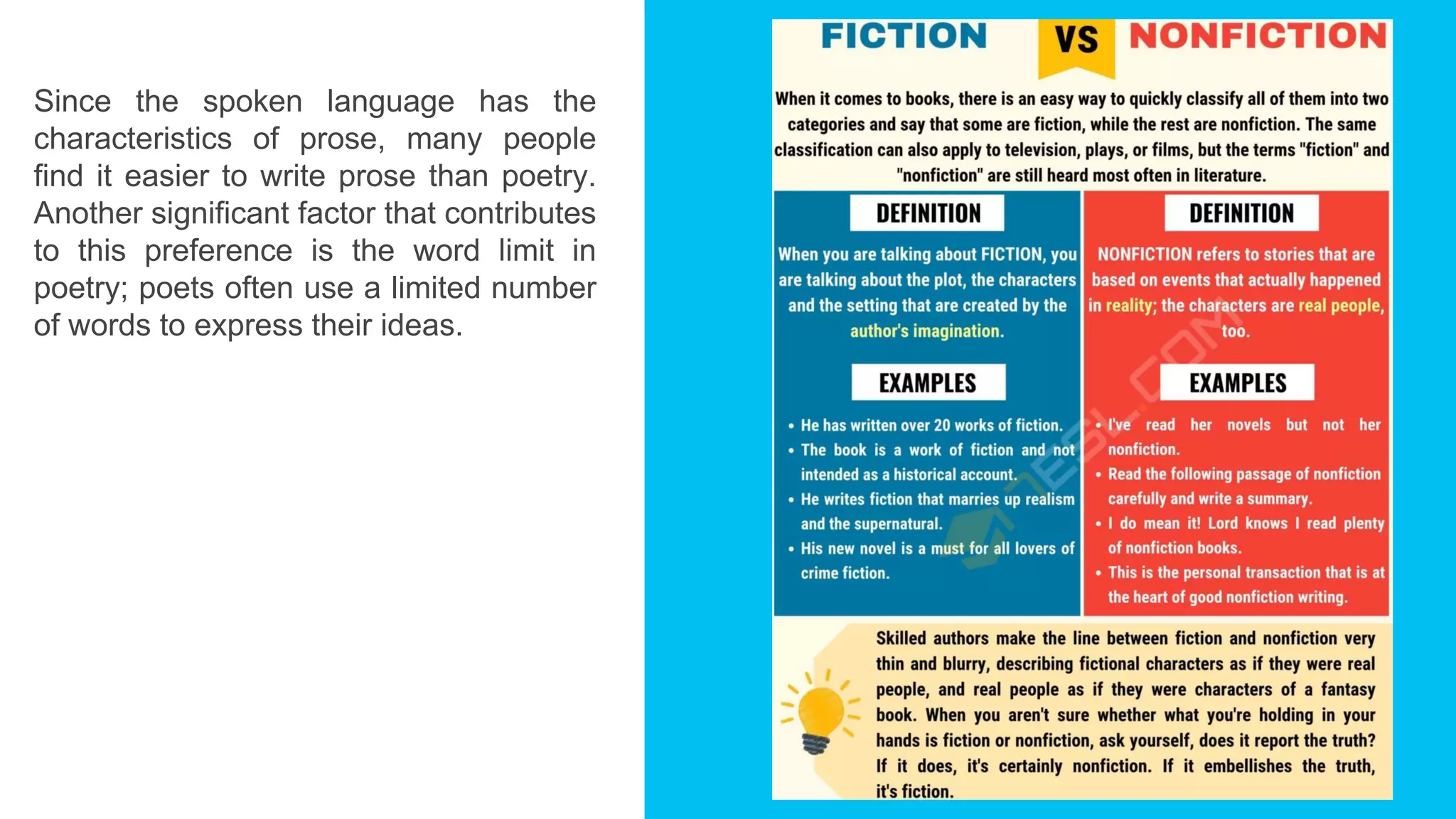
Prose, which includes novels, short stories, essays, and other forms of written communication, is often characterized by its straightforward and factual style. Its primary purpose is to convey information, tell a story, or express an opinion in a clear and concise manner. Prose is an essential part of our daily lives, as it's used in newspapers, magazines, books, and even social media. Examples of prose include news articles, blogs, and instructional manuals. The benefits of prose are numerous, as it allows us to communicate complex ideas, share knowledge, and entertain ourselves through engaging stories.
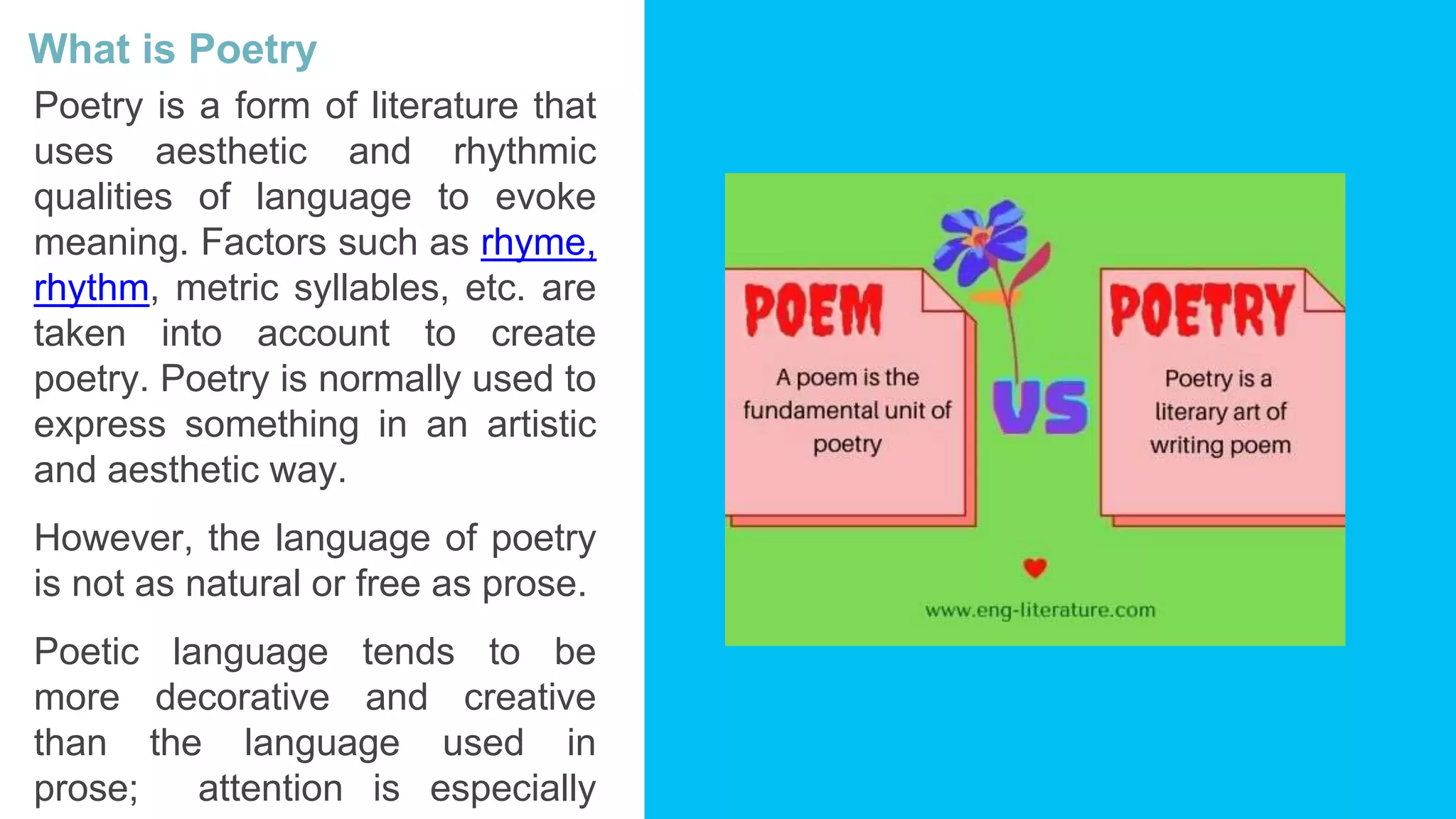
On the other hand, poetry is a more creative and expressive form of literature, often using metaphor, simile, and other literary devices to convey emotions and ideas. Poetry is designed to evoke feelings, spark imagination, and challenge our perspectives. Its purpose is to create a unique and vivid experience for the reader, using the careful selection of words, rhythm, and sound. Examples of poetry include sonnets, haikus, and free verse. The benefits of poetry are just as significant, as it allows us to tap into our emotions, explore the human condition, and appreciate the beauty of language.
Must Read
So, how can you enjoy prose and poetry more effectively? Here are some practical tips: When reading prose, try to identify the author's purpose and tone, and consider how the language and structure contribute to the overall message. When reading poetry, take your time to absorb the imagery, rhythm, and emotions conveyed, and don't be afraid to interpret the meaning in your own way. You can also try writing your own prose and poetry, as this can help you appreciate the craft and creativity involved in both forms.
In conclusion, both prose and poetry are valuable forms of literature, each with its own unique characteristics and benefits. By understanding the key differences between them, we can appreciate the diversity of human expression and the important role that literature plays in our lives. Whether you're a reader, writer, or simply someone who appreciates the power of language, prose and poetry have the potential to inspire, educate, and entertain us in ways that few other art forms can.